
Introduction
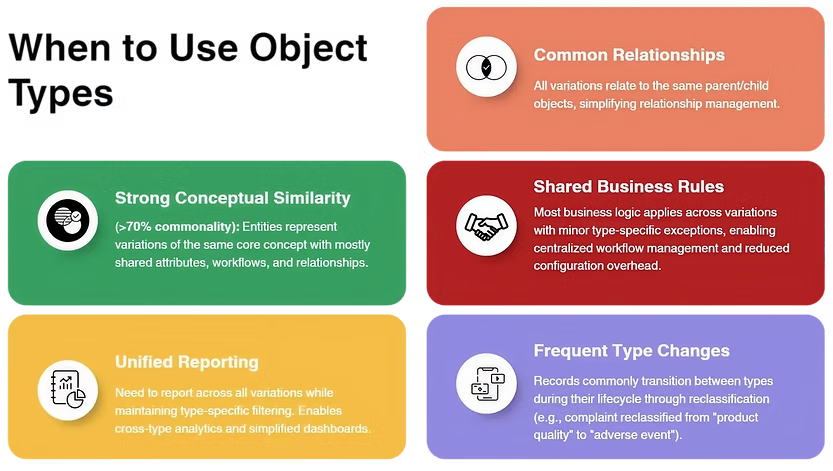
One of the most critical architectural decisions in Veeva Vault is determining whether to model data variations using object types within a single object or to create separate objects entirely. This decision impacts data integrity, user experience, reporting, performance, and long-term maintainability.
Understanding the Fundamentals
Object Types
Object Types allow variations of a single object with different field sets and behaviours while maintaining a unified structure. All records share the same base object with type-specific configurations, a common lifecycle (with optional type variations), and a unified security model
Example: Study Documents with types for Protocol, ICF, CRF, all sharing study reference and effective date, while each has type-specific workflows
Separate Objects
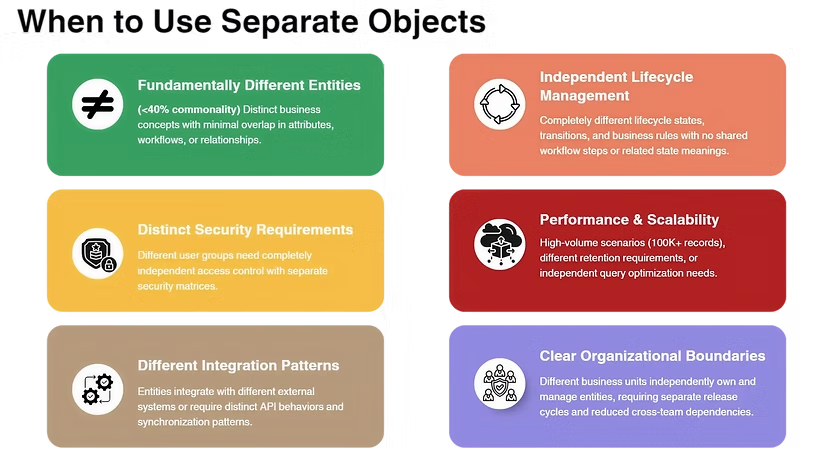
Separate Objects establish completely independent entities with distinct schemas, lifecycles, relationships, security models, and API endpoints.
Example: Quality Management with separate CAPA, Deviation, Change Control, and Complaint objects, each with unique lifecycle complexity and regulatory requirements.
Usage
Decision Framework
Anti-Patterns to Avoid
- Type Proliferation: Creating 20+ types for minor variations. Solution: Use configurable fields or classification taxonomy.
- The “Mega Object”: Forcing unrelated entities into one object where most fields are unused per type. Solution: Split into separate objects.
- Premature Separation: Creating separate objects before understanding commonalities, resulting in duplicate configurations. Solution: Start with types, split when complexity warrants.
- Security by Type: Using object types solely for security segregation. Solution: Use role-based security with separate objects if needed.
Real-World Examples
Regulatory Submissions (Object Types ✓)
Single Submission object with types: IND, NDA, BLA, 510(k), PMA, MAA.
Rationale: Common workflow, shared relationships, cross-submission reporting critical.
Result: Unified reporting, consistent user experience.
Quality Management (Separate Objects ✓)
Separate objects: CAPA, Deviation, Change Control, Complaint.
Rationale: Different lifecycle complexities (5 vs 15+ states), distinct regulatory requirements, and different integrations.
Result: Clear ownership, optimized performance, and regulatory compliance.
Document Management (Hybrid ✓)
Separate objects by domain (Manufacturing, Quality, Clinical Docs) with types within each (SOPs, Specs, Protocols).
Rationale: Fundamentally different across domains, logical variations within.
Result: Optimal balance of flexibility and manageability.
Best Practices
- Start Simple: Begin with object types when uncertain. Easier to split later than merge.
- Document Decisions: Maintain architectural decision records with rationale, alternatives considered, and trade-offs.
- Plan for Growth: Anticipate new types/objects, leave room for expansion, avoid hard-coded dependencies.
- User Experience First: Test with actual users, optimize for common workflows, minimize configuration complexity.
- Monitor and Refactor: Regularly assess performance, user feedback, and business alignment. Refactor when needed.
Key Takeaways
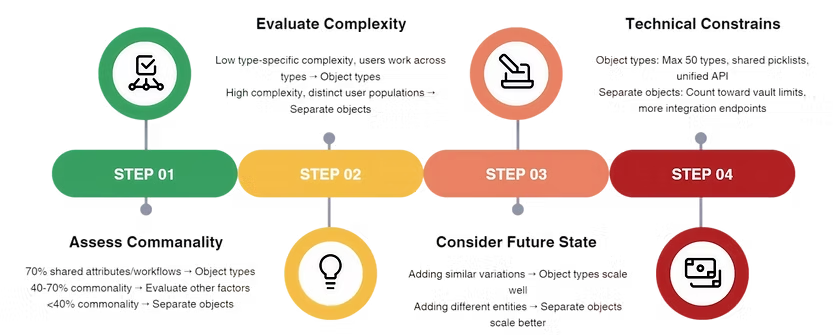
- Object types excel for variations of the same concept with shared workflows (>70% commonality)
- Separate objects suit fundamentally different entities with distinct lifecycles (<40% commonality)
- Use the 4-step framework: assess commonality, evaluate complexity, consider future state, check technical constraints
- Avoid type proliferation, mega objects, premature separation, and security-by-type
- Document decisions and remain open to refactoring as requirements evolve
By applying these principles, you create scalable, maintainable Vault object models aligned with business objectives, supporting current operations and future growth.
- Vault Quality 25R3 Smarter QMS Workflows - July 2, 2026
- Sustaining Momentum in Vault Programs After Go-Live – Advanced Edition - May 26, 2026
- Optimizing PromoMats Review Cycles - May 6, 2026