
Artificial Intelligence is quickly becoming a key driver of innovation and efficiency across industries. However, many organizations struggle with how to adopt AI effectively. A clear Enterprise AI Adoption Roadmap helps businesses implement AI strategically, minimize risks, and generate measurable value.
Below is a simplified roadmap that enterprises can follow to successfully integrate AI into their operations.
1. Define Business Objectives
The first step in AI adoption is identifying clear business goals. AI should always solve real business problems rather than being implemented just because it is trending.
Common objectives include:
- Automating repetitive processes
- Improving decision-making through predictive analytics
- Enhancing customer experience
- Reducing operational costs
- Increasing operational efficiency
When AI initiatives are aligned with business outcomes, organizations can measure success more effectively.
2. Ensure Data Readiness
AI systems rely heavily on high-quality data. Before implementing AI, enterprises must ensure their data is properly structured, accessible, and secure.
Key data readiness steps include:
- Consolidating data from multiple sources
- Cleaning and organizing datasets
- Establishing data governance policies
- Ensuring privacy and compliance standards
A strong data foundation significantly improves AI model performance and reliability.
3. Start with Pilot Projects
Rather than implementing AI across the entire organization at once, enterprises should begin with small, high-impact pilot projects.
Examples include:
- AI-powered customer support chatbots
- Predictive maintenance systems
- Automated document processing
- Fraud detection solutions
Pilot projects help organizations test AI capabilities, demonstrate value quickly, and build internal confidence.
4. Build AI Talent and Governance
Successful AI adoption requires the right people and policies.
Organizations should focus on:
- Hiring or training data scientists and AI engineers
- Upskilling employees with AI literacy programs
- Creating governance frameworks for ethical AI use
- Establishing leadership oversight for AI initiatives
This ensures AI implementation remains responsible, scalable, and aligned with company goals.
5. Scale and Optimize AI
Once pilot projects prove successful, organizations can scale AI across departments and workflows.
This stage includes:
- Integrating AI into existing business systems
- Standardizing AI development processes
- Monitoring AI model performance
- Continuously improving algorithms with new data
Scaling AI enables enterprises to transform operations and unlock long-term competitive advantages.
Enterprise AI Adoption Roadmap Overview
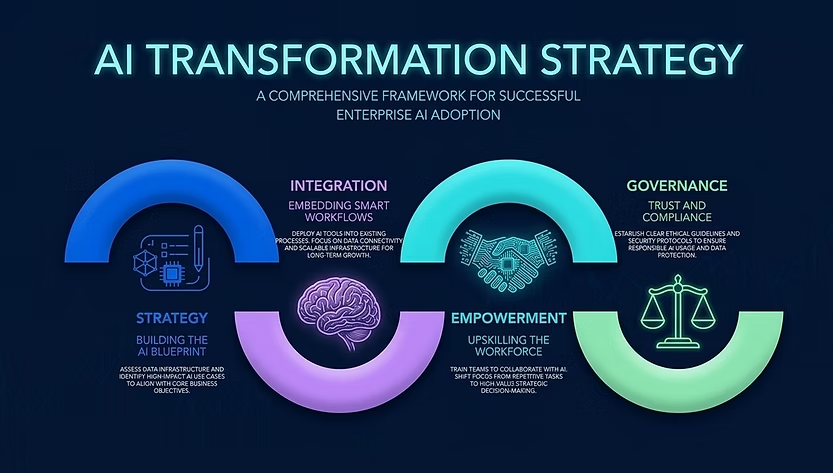
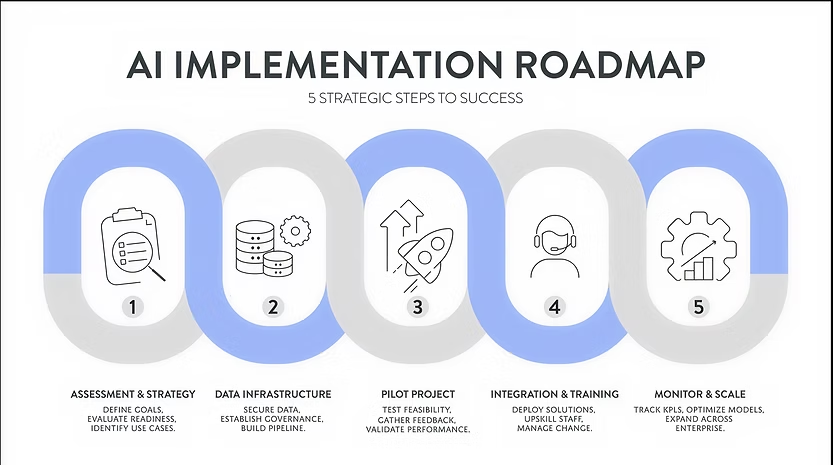

A typical AI adoption journey progresses through five stages:
1. Awareness – Understanding AI opportunities within the organization
2. Experimentation – Running initial AI pilot projects
3. Operationalization – Integrating AI into business workflows
4. Scaling – Expanding AI use across multiple departments
5. Transformation – Becoming a fully AI-driven enterprise
Conclusion
AI adoption is not just about technology-it requires clear strategy, strong data foundations, skilled teams, and continuous improvement.
By following a structured Enterprise AI Adoption Roadmap, organizations can move from experimentation to enterprise-wide transformation, enabling smarter decisions, improved efficiency, and sustained business growth.
- The End of Screens: AI and the Future of UI - April 21, 2026
- Veeva Vault 26R1 Doctype Triggers Guide - April 7, 2026
- Enterprise AI Adoption Roadmap Guide - March 5, 2026